
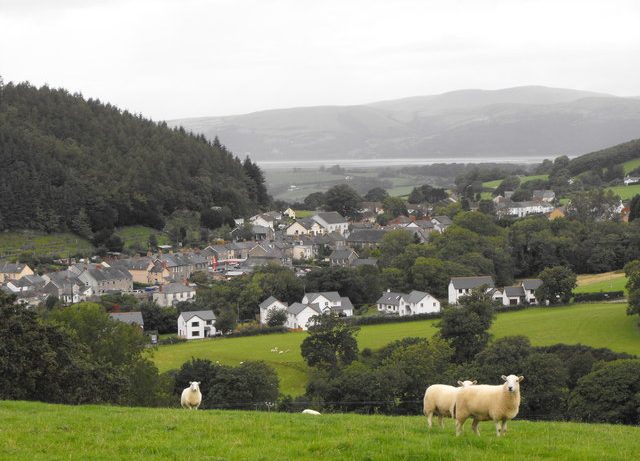
The village of Tal-y-bont can be found about halfway between Aberystwyth and Machynlleth on the Ceredigion coast. With a population of under 1,000, Tal-y-bont is a small but cosy place surrounded by lush green farmland and is but a stone’s throw from the picturesque Dyfi estuary. Yet, its natural beauty is not the only worthy reason for exploring this little corner of Wales. In fact, Tal-y-bont has a rich history of mining, agriculture and is the birthplace of one of Wales’s greatest poets.
The Men Who Struck Silver – Esgair Hir and Esgair Fraith Mines
Situated in the mountainous region about six miles east of Tal-y-bont, these mines were celebrated as “the richest in all of Wales” or perhaps even more grandiose as the Welsh Potosi because of their purported abundance of silver to rival the famous mines of Bolivia.
The vein of metal ore is a fracture zone, in some places sixty feet wide, running east to west on the perimeter of the rocks from the Ordovician Period (485.4 million years ago) where they meet with those of the Silurian era (443.8 million years ago). The lead ore formed vertical shoots or pipes that reduced in size as they went deeper into the Earth and were divided by seems of barren soil.
A rock formation visible from surface level containing lead ore was discovered at Esgair Hir in the late 17th century and the owner of the estate on which it lay, Sir Carberry Pryse, made the decision to extract the material by himself. However, the silver content within the ore sparked the interest of the Society of Mines Royal who descended on the site. This was because they had been granted a royal charter giving them a monopoly over any rich silver or gold mines discovered across the country. Pryse, unhappy with this situation entered the courts for his right to mine Esgair Hir and actually won. After the judge decided in his favour Pryse made short work of forming a mining company and he quickly began work in the mountains above Tal-y-bont.
Pryse passed away in 1694 and his former site manager William Waller, a man who had a reputation for twisting the truth in such a convincing way, made several fanciful claims that ensured the mine fell into his hands. Together with Sir Humphrey Mackworth, a man with industrial interests in the coal and smelting works in Neath, Waller reorganised the original company into the Company of Mines Adventurers of England (CMAE) and took control. CMAE hit its peak between 1703 and 1708 when it ceased operation at Esgair Hir, extracting a recorded 2,000 tons of ore.
The Industrial Revolution increased the ability to extract from Esgair Hir and Esgair Fraith which in turn attracted more workers to the surrounding areas. None more so than Tal-y-bont which in 1835 had only 35 houses, mostly small cottages with thatched roofs. In the proceeding 20 years the village grew drastically with the construction of terraced housing, shops and a local pharmacist. Nowadays, these are listed buildings and even retain some of their original features. A further development was in part due to the remoteness of the mines. During the winter of 1839, William and Eyton, a smelting company which originated in Flintshire and had taken over operations at Esgair Hir began constructing 4.5 miles of road to allow easier access to the mine. The job was undertaken by a group of 99 men employed by the company and was completed in the New Year of 1840. At the same time William and Eyton had a pump wheel constructed at the mine and a system of ponds dug out to service it. Although things were looking up for the mines William and Eyton had to close up business in 1848.
What followed can only be described as corruption and villainy. A businessman William Francis purchased the mine and had it repaired to a working standard before handing control over to the Welsh Potosi Company. This company set up new whims (a winch-like device) on two mine shafts and bult several outbuildings on the site. However, in the business of doing this they did not pay the miners who were forced to go on strike in 1856. The company then reported that it would buy steam engines to stream line the process of getting the ore up the steep incline to their dressing floors. Although the Welsh Potosi Company claimed this was completed nothing materialised and the company declared bankruptcy in 1857.
From 1857 to 1904 a series of small ventures worked the mines but with very little to show for it. The amount of ore being discovered in newer shafts was not enough to sustain profitable business and the mines declined to the point of abandonment. Today some ruins of the buildings built by the Potosi Company remain on the mountainside and serve as a reminder of what once was a vibrant mining community.
The Tal-y-bont Agricultural Show
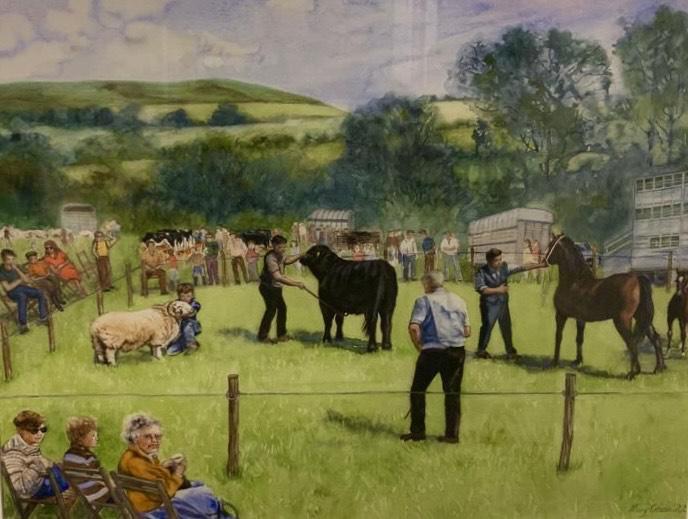
Despite the decline of the mining industry, Tal-y-bont also prides itself on a strong and diverse agricultural industry which survives to this day. The best example of this thriving community is the annual Talybont Agricultural Show, the number one event for the people of the Ceulanamaesmawr region, a show which has been running for over 100 years.
Primarily an agricultural and horticultural show, Talybont also plays host to a wide variety of events from sheep shearing to vintage farm equipment displays. Usually held towards the end of August each year in the fields behind the Black Lion pub, the Talybont Show is a great day out for the whole family.
Last year the show had a Craft and Food area which held a fantastic little marketplace of local creatives, designers, makers and artisan producers showcasing their wares. Here, there were up to 30 sellers offering a range of items including books, textiles, crochet, knitwear, ironwork, wood carvings, clothes, ceramics and artwork. Plus, there were also award-winning producers of delicious cheeses, drinks, breads, chutneys, and baked goods. This area of the show also played host to those showcasing traditional skills that have a long heritage in Wales, such as spinning, weaving, rope making and bee-keeping.
In the Field Section judges evaluate a multitude of categories for horse, sheep and cattle including a Young Handler Competition which allows the upcoming generation to showcase their skills. This part of the show is also a wonderful way to see some of the native species of Wales up close and personal, particularly impressive is the Welsh Black Cattle. As for the Marquee, this is where growers can enter competitions to show off their fruits, vegetables, roots and grains that they have painstakingly raised during the season. Overall, the Talybont show is a prime example of the living, breathing history of the village and its people preserved for centuries through community and tradition and one which is always welcoming to newcomers and visitors to share in their festivities.
The Bard John James Williams (1869-1954)
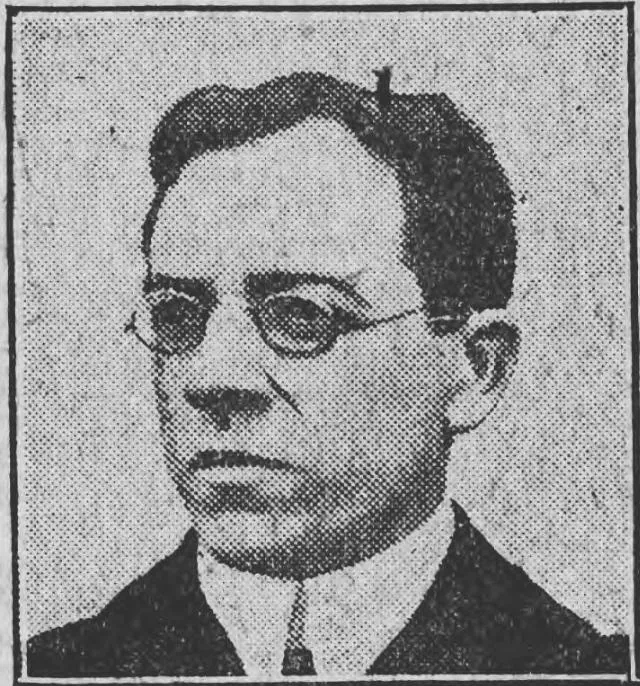
Born on October 8, 1869, in Taigwynion near Tal-y-bont, Cardiganshire, he was the eldest of William and Elizabeth Williams’ twelve children. His father was affiliated with the Bethel church in Tal-y-bont, while his mother attended Pen-y-garn church. John James’s basic education took place at Rhydypennau school but due to unemployment in the local lead mines, his father moved the family to the coalfields of Mountain Ash for several months in 1879-80. In 1882, the family settled in Penrhiwceibr and joined Carmel chapel but this was short lived as they later relocated to Ynysybŵl. But it was here where Williams began preaching at Tabernacl which set him on the path to becoming more involved with the church.
In 1891, he was accepted at Memorial College in Brecon and spent the first year at the University College of Cardiff, where he excelled in Welsh literature and language. Despite his obvious skills with a pen his preaching days in Ynysybŵl had been formative and he was ordained at Bethania church in Abercynon on July 22, 1895, and moved to Moriah church in Rhymney in 1897. In 1903, he accepted a position at Seilo church in Pentre, Rhondda, succeeding Lewis Probert. He began a lengthy ministry at Tabernacl, Morriston, in 1915, remaining there until his retirement in July 1944. He was among the most sought-after preachers of his time and served as chairman of the Union of Welsh Independents in 1935.
Although his first duty was always to God, he found time to pick up the pen during his ministry and began competing in the National Eisteddfod in the early 1900s and won the chair twice: first in 1906 at Caernarfon for his ode ‘Y Lloer,’ which quickly gained popularity for its lyrical quality, and again in 1908 at Llangollen with ‘Ceiriog.’ He then judged the chair competition for nearly 25 years and served as Archdruid from 1936 to 1939. He also wrote two scriptural plays in verse, ‘Ruth’ (1909) and ‘Esther’ (1911), both set to music by James Davies. In 1929, he published ‘Cadair Tregaron,’ featured in the 1931 anthology ‘Straeon y Gilfach Ddu,’ depicting the lives of coal miners in the Glamorgan dialect. Williams’s final collection was ‘Y lloer a cherddi eraill’ (1936) and some of his poems, like ‘Clychau Cantre’r Gwaelod’ and ‘Canu’r plant,’ became well-known songs. Overall, John James Williams, the son of Tal-y-bont, was a great man with a phenomenal mind and one who deserves to be remembered in the annals of this village’s history.
Written by C. James McPherson MA MSc.
Cover photo: Eddie Webster / Tal-Y-Bont / CC BY-SA 2.0