
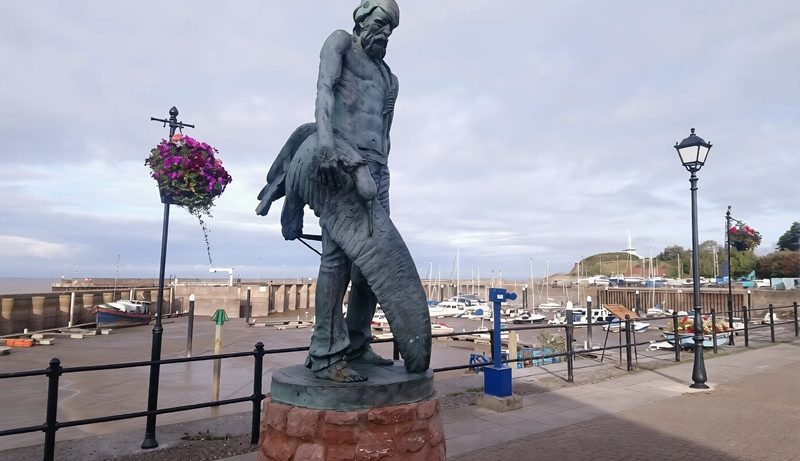
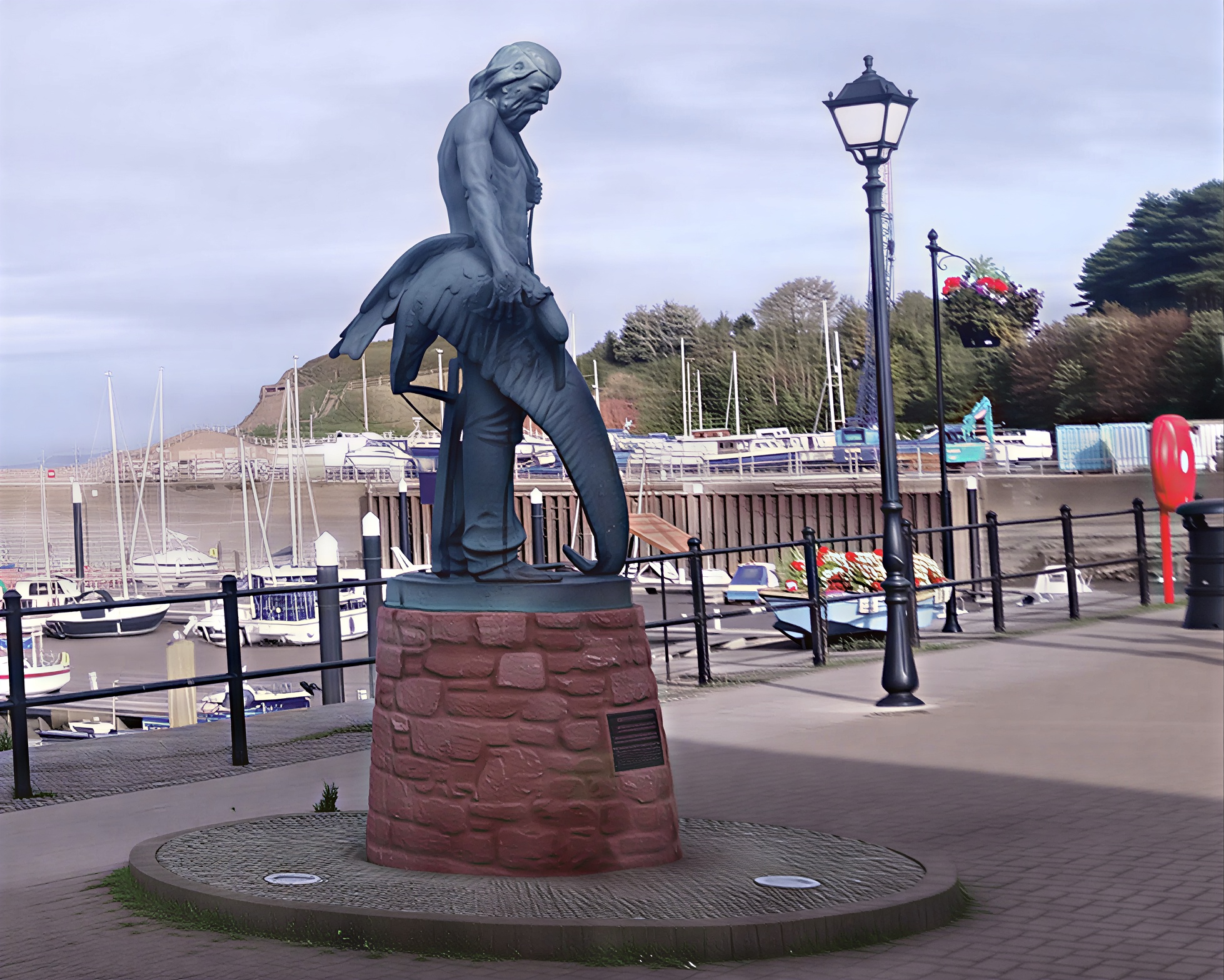
A seven-foot bronze statue of an Ancient Mariner stands proudly on Watchet Esplanade in Somerset, a nod to the famous poem by Samuel Taylor Coleridge.
British Romantic literature began in 1978 with the publication of Lyrical Ballads by William Wordsworth and Samuel Taylor Coleridge. The opening poem in the original edition spanned across no fewer than 50 pages – The Rime of the Ancient Mariner. In this iconic poem, a mariner stops a reluctant wedding-goer to share his story of sin, redemption, and the beauty of life. At first, the wedding-goer is merely amused by the old man, at least enough to risk running late for the ceremony. However, that soon turns to impatience, fear, and fascination as the mariner describes his seven-day, seven-night journey at sea.
It is an ancient Mariner,
And he stoppeth one of three.
‘By thy long grey beard and glittering eye,
Now wherefore stopp’st thou me?
The mariner’s ship is eventually caught in a storm and driven all the way to the Antarctic, where it becomes stuck in the ice until an albatross appears. The mighty bird leads the ship out of the ice and is celebrated by the crew until the mariner shoots it dead with his crossbow.
‘God save thee, ancient Mariner!
From the fiends, that plague thee thus!—
Why look’st thou so?’—With my cross-bow
I shot the ALBATROSS.
The crew of the ship is indecisive in their analysis of the events. At first, they are angry at the mariner for killing what they deemed to be a good-luck charm. Then, the crew U-turns and supports his decision to shoot the bird. Finally, they change their minds one last time, forcing the mariner to wear the dead albatross around his neck when they find themselves sailing uncharted waters.
Day after day, day after day,
We stuck, nor breath nor motion;
As idle as a painted ship
Upon a painted ocean.
Water, water, everywhere,
And all the boards did shrink;
Water, water, everywhere,
Nor any drop to drink.
Ah! well a-day! What evil looks
Had I from old and young!
Instead of the cross, the Albatross
About my neck was hung.
The ship eventually crawls upon a ghostly vessel, and the crew is met with two mysterious figures – the skeletal Death and a pale woman by the name of Nightmare Life-in-Death. The two figures play a dice game to decide the fate of the crew. While Death claims the lives of all but one of the crew, Life-in-Death wins the life of the mariner. The mariner’s shipmates die at sea one by one until he is the only one left, surrounded by corpses for seven days and seven nights.
Four times fifty living men,
(And I heard nor sigh nor groan)
With heavy thump, a lifeless lump,
They dropped down one by one.
However, as he comes to appreciate the creatures and beauty around him, the mariner’s curse is lifted, and the albatross falls from his neck. He returns home as the lone survivor, forced to spend the rest of his days telling his tale in the hope of easing the burden of his guilt, while helping others to avoid his mistakes.
He prayeth best, who loveth best
All things both great and small;
For the dear God who loveth us,
He made and loveth all.
The Mariner, whose eye is bright,
Whose beard with age is hoar,
Is gone: and now the Wedding-Guest
Turned from the bridegroom’s door.
He went like one that hath been stunned,
And is of sense forlorn:
A sadder and a wiser man,
He rose the morrow morn.
To this day, the Rime of the Ancient Mariner continues to inspire films, TV shows, shorts, musicals, and more. The poem serves as a moral allegory, illustrating the suffering that comes with sin, the heavy burden of guilt, and the penance required to claim redemption. It also holds clear themes relating to the sanctity of life and the beauty of the nature around us. A worthy spark that lit the fuse of British Romantic literature, which continued to develop over the next 50 years with the likes of William Blake, William Wordsworth, Coleridge, and later Lord Byron, John Keats, Mary Shelley, and Percy Bysshe Shelley.
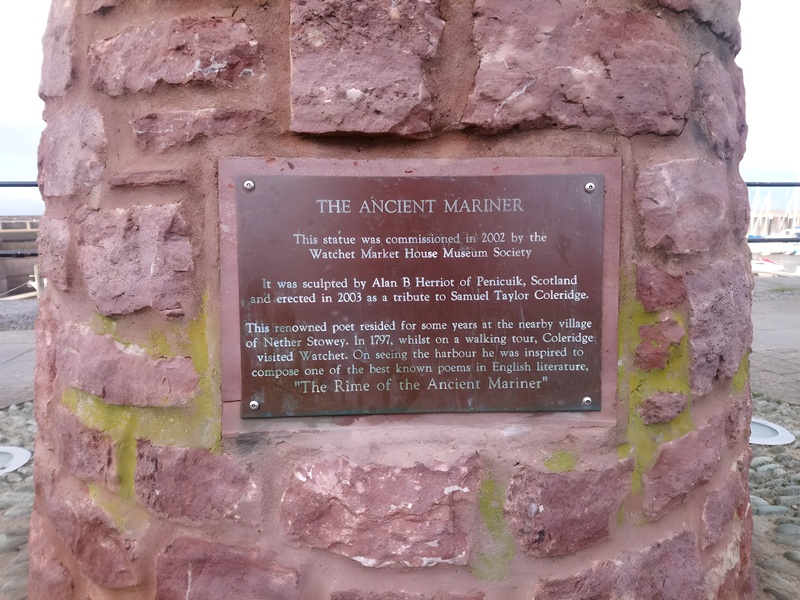
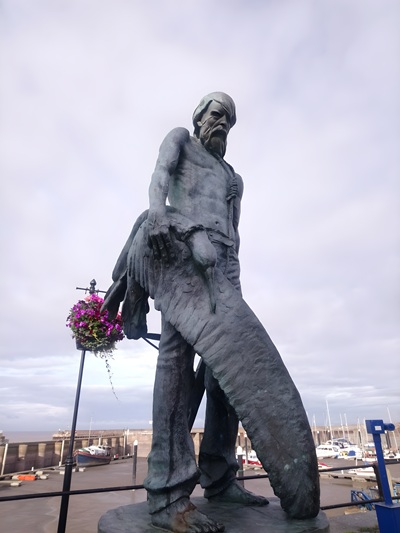
The Rime of the Ancient Mariner statue, crafted by Scottish sculptor Alan B. Herriot, can be found on Watchet Esplanade in Somerset. It is believed that this is the spot that inspired Coleridge to write the original poem. The seven-foot monument depicts the mariner himself, holding a crossbow in one hand and an albatross hanging from his neck. The statue was unveiled in 2003 and stands as a reminder of the core message Coleridge conveyed through his original poem – the sanctity of life, the power of nature, and the reality of redemption.