
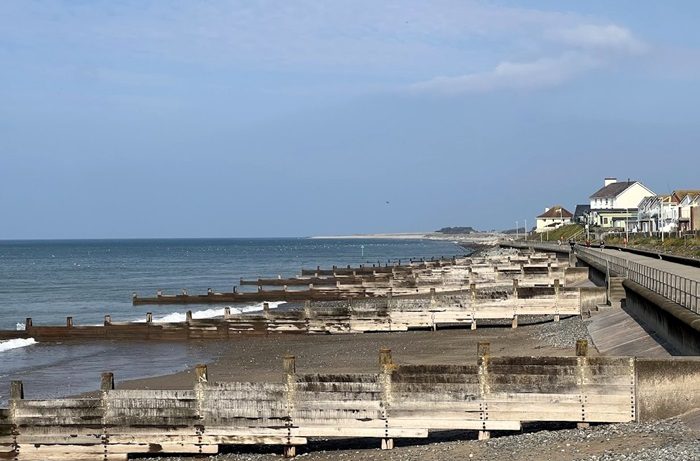
The seaside resort of Tywyn is more than the perfect place for a spot of surfing, or a relaxing walk along the promenade ice cream in hand. No, the town of Tywyn holds within it a fascinating tapestry of Welsh history which can still be explored today. From the earliest days of Christianity, the history of the Welsh language, the arrival of the railways and the faith of one mighty little girl, Tywyn and the surrounding countryside have it all…
The Medieval St Cadfan’s Church, Tywyn
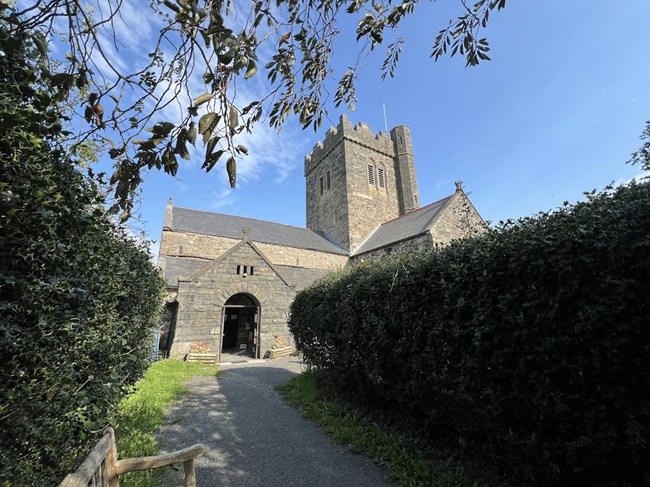
The church which stands today dates from the Norman era and showcases the classic but elegant 11th century-style English church tower. Inside an inscribed stone attracts thousands of visitors a year to see what is believed to be the earliest known example of Welsh writing.
Although a Norman structure the origins of the curch go back to the 6th century and the arrival of St Cadfan from Brittany. Here in Tywyn around 516 AD, Cadfan founded the first clas of its kind in Wales. A clas being an ecclesiastical settlement made up of a singular building administered by a community of clergymen and an abod unlike the later Norman monasteries which could be made up of several buildings. This particular church became a wealthy site, run by an abbot and clerics for a period of almost 150 years from 1147 to 1291. It also acted as mother church for the cantref of Merionnydd, and of course was named in honour of its founder St Cadfan.
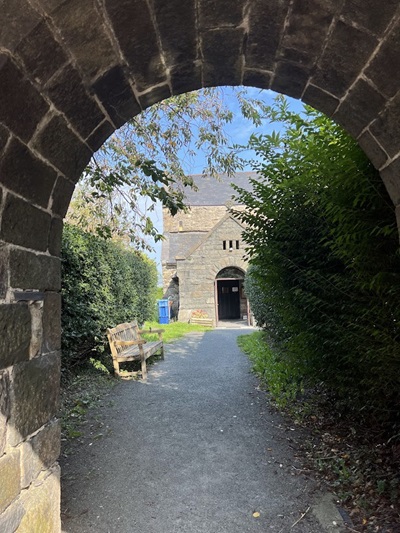
In its 12th century glory St Cadfan’s was compared to those great cathedrals at St David’s and Bangor and for many years the church stood in splendour looking towards the silvery waters of Cardigan Bay. That was until 1692 when the central tower collapsed, damaging the south transept as it fell. A rushed patch job followed leaving the church with no tower at all. 40 years passed before a new tower was built, but this time in the west end of the church, taking some length away from the medieval nave.
Then in 1881 more refurbishments were commissioned by Rev. Titus Lewis which saw the western tower demolished and the nave reduced even further. This paved the way for a tall central tower built on newer and stronger pillars while the chancel, transepts and crossings were finished to match the internal renovation. Despite all of the modern reworkings the nave and the side aisles remained untouched and even today standing in them transports you to the 12th century.
Even older still, the Cadfan Stone can be found immediately opposite the door of the church. This 9th century carved stone contains what is believed to be the oldest known example of writing in the Welsh language. According to Nancy Edwards the inscriptions on the four sides are as follows(1):
Side A + D – “Tengrumui wedded wife of Agdan (lies) fairly near (or very near) to Bud (and) Marciau (or But Marciau.)
Side A – “The mortal remains of the three”
Side B + C – “Cun woman (or wife of Celyn), a mortal wound remains.”
Side C – “The mortal remains of four”
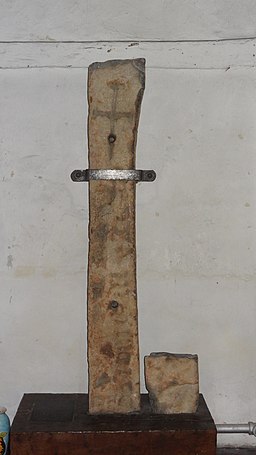
Photo: RwthTomos1948, CC BY-SA 4.0,
via Wikimedia Commons
What we can infer from this stone is that by the 9th century noble families in this region of Wales were using the Welsh language in commemorations, as well as Latin. Latin was presumed to have been the predominant written language in this period but this important artefact challenges that notion and helps us track the use of Cymraeg in the medieval period.
And to think that the Cadfan stone was discovered in use as a gatepost for a pigsty!
A final outstanding feature of St Cadfan’s Church are the pair of medieval effigies that can be found in the chancel. One depicts an unknown priest in full eucharistic vestments, although some have suggested it to be a mysterious female figure. The other is of an armoured knight believed to be Gruffud ab Adda of Dol-gôch and Ynysymaengwyn who died in 1331. This particular effigy however, is better known as ‘The Crying Knight’ due to the fact that a subtle flaw in the stonework around the knight’s eye becomes damp during wet weather, giving the impression that Gruffud is sobbing.
Industrious Tywyn and the Talyllyn Railway
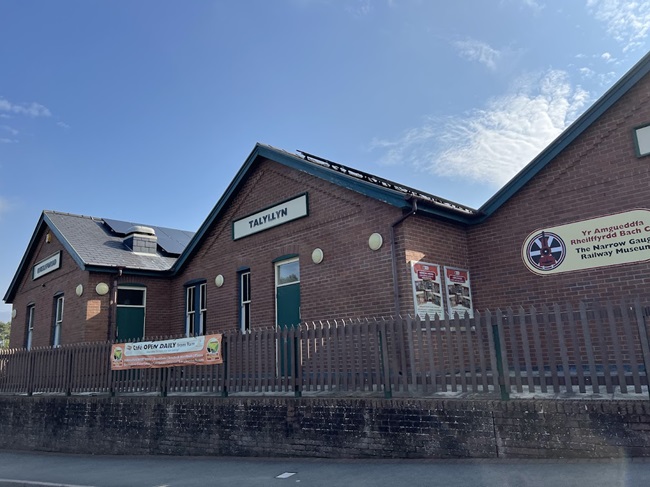
The Talyllyn Railway, situated in the picturesque Snowdonia National Park of Wales, is celebrated as a pioneering heritage railway that embodies the spirit of Victorian engineering and conservation. Spanning approximately 7.25 miles from Tywyn to Nant Gwernol, the railway was originally constructed to transport slate from the quarries of Talyllyn and the surrounding region to the coastal town of Tywyn, where it would be shipped out for broader distribution.
The railway’s construction commenced in 1864, with its official opening on 1st April 1865. Built primarily to serve the needs of the local slate industry, the Talyllyn Railway featured a narrow-gauge design, which was ideal for navigating the rugged terrain of Snowdonia. Over the years, it became an essential lifeline for local communities and businesses, not only for slate transportation but also for delivering goods and passengers across the challenging landscape.
However, with the decline of the slate industry post-World War II, the Talyllyn Railway faced considerable challenges, leading to its closure in 1950. The future of the railway appeared bleak until a group of dedicated enthusiasts, led by the railway’s former manager, decided to take action. In a groundbreaking move for heritage railways, the Talyllyn Railway became the first in the world to be preserved and operated by a volunteer railway society—the Talyllyn Railway Preservation Society (TRPS). This marked a pivotal moment in railway heritage, where ordinary citizens could take a proactive role in preserving their local history.
The restoration efforts, initiated in 1951, were extensive, with volunteers dedicating their time and resources to revitalize the aging infrastructure and rolling stock. Their labor of love paid off, and by 1952, the railway reopened to the public, offering a nostalgic journey through the stunning Welsh landscape. The unique appeal of the Talyllyn Railway is further enhanced by its historic locomotives, such as the iconic “Dolgoch” and “Countess,” which illustrate the peak of steam technology.
Conservation of the Talyllyn Railway has continued well into the 21st century, enhanced by the recognition of its historical significance. In 1973, it was designated a Scheduled Ancient Monument, thus safeguarding its heritage status. Moreover, the railway is part of the broader movement to promote sustainable tourism in rural areas, balancing conservation with economic development. The Talyllyn Railway continues to engage in educational outreach, hosting events and workshops, fostering a new generation’s appreciation for industrial heritage.
Today, the Talyllyn Railway stands as a testament to the power of community action and dedication to preservation. It not only serves as an essential cultural asset but also invites visitors from around the world to explore the enchanting landscapes of Snowdonia, riding on the legacy of Victorian ingenuity, firmly rooted in the rich tapestry of Welsh history.
The Story of Mary Jones and her Bible
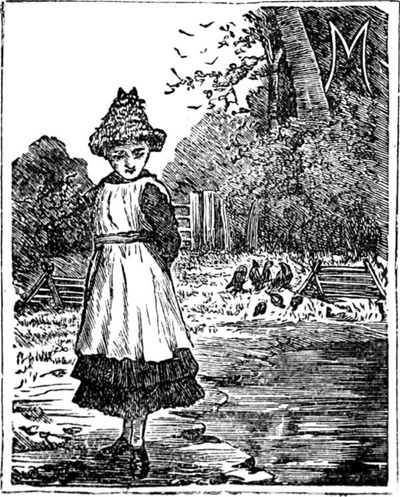
The year was 1800 and Mary Jones was a fifteen-year-old girl from a poor family, the daughter of a weaver, who lived in the village of Llanfihangel-y-Pennant. Her mother and father were devout Christians and members of the Presbyterian Church of Wales, Mary herself became involved with the church at the mere age of eight. Thanks to the work of clergyman Thomas Charles, an important figure in Welsh Presbyterianism,
Mary had learned to read as part of one of his circulating schools organised to roam the Welsh countryside educating its children. During these classes, in which it was a principal teaching tool, Mary became determined to own a Bible of her own. However, the nearest place in which she might find a copy for sale was the town of Bala, 26 miles away. Even then, it was not certain that anyone in the town would be willing to sell to her.
Nevertheless, after six years of saving up enough money to purchase a copy she set out one Spring morning in 1800. Mary walked the full 26 miles over rugged terrain and mountains, barefoot as she usually was, to Bala to purchase a Bible from none other than Thomas Charles. As the story goes, Thomas was so taken aback by the young girl’s commitment and her faith that he was compelled to write to the Council of the Religious Tract Society to form a new society for the supply of Bibles all across Wales. And so it was that in 1804 the British and Foreign Bible Society was formed with a pledge to make the Bible available throughout not just Wales but the whole world.
As well as completing the Heritage Trail that retraces Mary’s footsteps, a perfect end point and peaceful place for reflection on this rich journey through Welsh history is the memorial to Mary Jones that was erected over the ruin of her cottage where she spent most of her life in Pont Ty’n-y-fach. A solid reminder of the impact one person can have on the history of a nation.
(1) Edwards, Nancy. 2013. A Corpus of Early Medieval Inscribed Stones and Stone Sculpture in Wales. Vol. III: North Wales. Cardiff: University of Wales Press, p. 430.
Written by C. James McPherson MA MSc.