
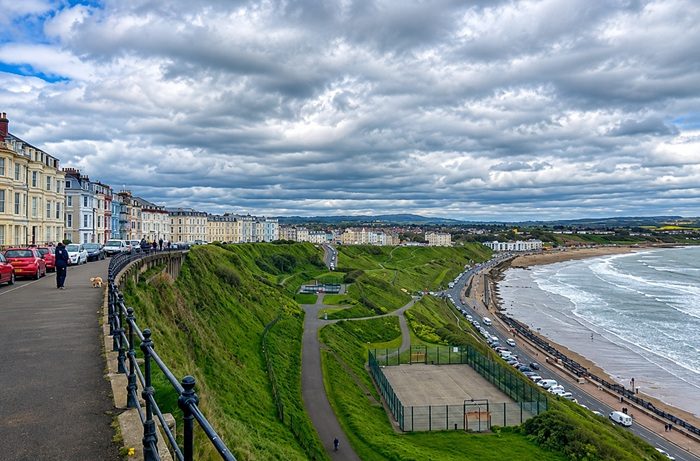
The Brontë sisters are some of the most renowned writers and figures in British literary history, penning groundbreaking novels and poems in the 1800s that are still beloved to this day. Charlotte, famous for Jane Eyre, Emily for Wuthering Heights, and Anne for Agnes Grey and The Tenant of Wildfell Hall, account for tens of millions of book sales over the last 175 years. But did you know that Anne has a unique connection to the English coastal town of Scarborough?
When did Anne Brontë visit Scarborough?

Although the majority of the Brontë family is buried in Haworth, where they spent much of their lives, Anne is the only exception. In 1840, Anne moved to York to serve as a governess at Thorp Green Hall, where she educated the children of Reverend Edmund Robinson. Unfortunately, the youngest Brontë sister struggled with homesickness and was only able to spend around six weeks of the year with her family. She soon settled into her new life with the Robinsons, though, and eventually became close friends with the girls, Lydia, Elizabeth, and Mary. During her five years with the Robinsons, Anne would also accompany the family on their annual trip to Scarborough, where they would spend around five weeks each summer. It was during these holidays that Anne Brontë developed a strong affection for the coastal town.
Charlotte Brontë, who had made the trip alongside her little sister, decided to “lay the flower where it had fallen,” meaning Anne was buried at St Mary’s church in Scarborough, rather than next to Emily back in Haworth.
To this day, Scarborough remains intrinsically linked with the life and works of Anne Brontë, and many fans still flock to the English coastal town to pay their respects, 175 years later.
Although Scarborough was never mentioned by name, it is well known to feature heavily in both Agnes Grey and The Tenant of Wildfell Hall. Experts believe that Scarborough Castle was the location for Weston’s proposal to Agnes, while Thorp Green Hall inspired the fictional Horton Lodge. Even Anne’s grave is located close to the setting for Agnes Grey’s final chapter, where the titular character and Weston finally find peace and happiness. It seems fitting that Anne is still able to gaze out at the ocean all these years later, just as she did during her life.
Anne Brontë and the Grand Hotel Scarborough
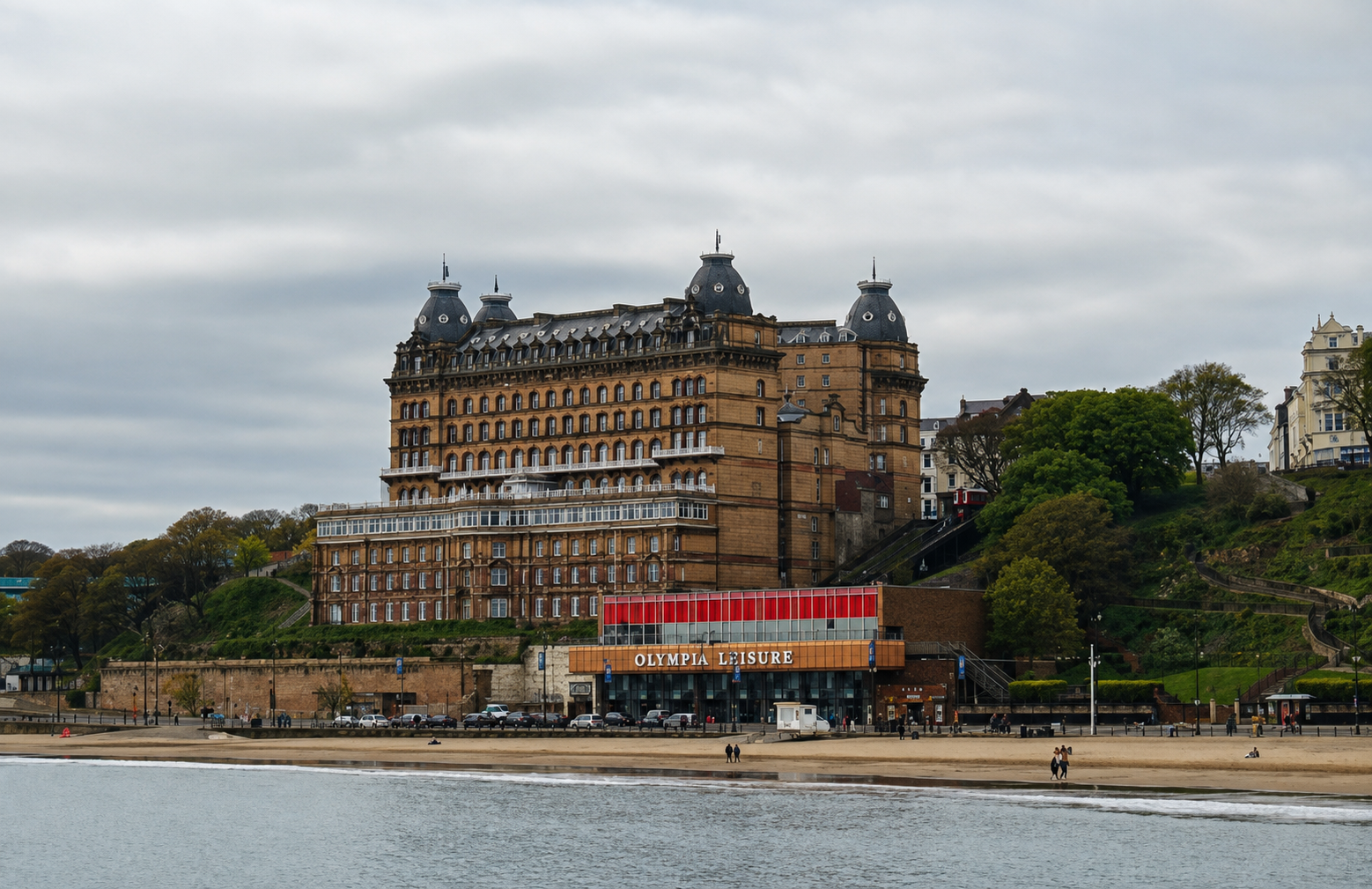
When Anne and Charlotte travelled to Scarborough in 1849, they stayed at a lodging house by the name of Wood’s Lodgings, No.2 The Cliff. After her condition took a turn for the worse, it was here that Anne Brontë lived out her final days. On 28 May 1849, the day of Anne’s death, the Grand Hotel Scarborough did not even exist. It wasn’t until 1863 that construction began, and it opened its doors for the first time in 1867 to replace the old lodging house. A blue plaque on the building now commemorates Anne Brontë’s death.
Anne Brontë’s gravestone
Charlotte commissioned a gravestone to honour her sister’s resting place. It read: “Here lie the remains of Anne Brontë, daughter of the Revd P. Brontë, Incumbent of Haworth, Yorkshire. She died aged 28 May 28th 1849.” It wasn’t until three years later that Charlotte returned to visit the grave and noticed multiple errors. One mistake remained, even after corrections, stating that Anne died aged 28, rather than 29. In 2011, a new plaque was commissioned by the Brontë Society to correct the errors, and because the original stone had become partially illegible.
Anne Brontë’s final poem
Days before her trip back to Scarborough in 1849, Anne Brontë finished writing her final poem, reflecting on her deteriorating health and the idea of death.
It opened:
A dreadful darkness closes in
On my bewildered mind;
O let me suffer and not sin,
Be tortured yet resigned.
And closed with:
If Thou shouldst bring me back to life
More humbled I should be;
More wise, more strengthened for the strife,
More apt to lean on Thee.
Should Death be standing at the gate
Thus should I keep my vow;
But, Lord, whate’er my future fate
So let me serve Thee now.
Author: Seb Jenkins
Photos: GBC