
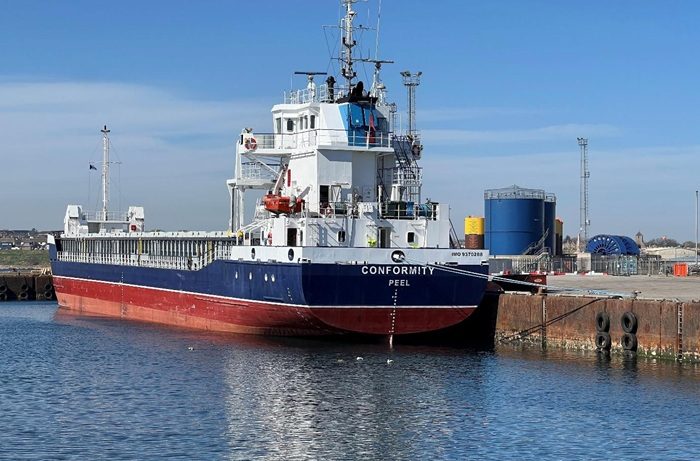
Peterhead’s identity has always been intrinsically tied to the sea. Sitting on the North-East coast of Scotland, exposed to the North Sea, this fishing port has more than 400 years of maritime history. The origins of the harbour itself date back to the late 16th century, having gone through significant eras in whaling, herring fishing, and white-fish trade. In fact, during the peak herring fishing years in the 1890s, Peterhead harbour housed a fleet of approximately 580 vessels.
Peterhead Coast Has a Stormy and Historic Past
Don’t let the images of Peterhead fool you, though. The water may be a stunning sapphire blue, the harbour may be peaceful, and the rocky landscape may be moody, but this is not a sheltered stretch of coastline. The weather can be harsh, the harbour is exposed, and storms were a common danger to shipping back in the 1900s. During this period, there were widespread concerns about stormy weather along the east coast of Britain in general, leading to one bright idea. Why not build a bunch of refuges?
For those who aren’t clued up on the coastal harbour lingo, a refuge is a protected bay, port, or constructed coastal area where ships can safely flee to during dangerous storms. Peterhead became the only harbour of refuge example in all of Scotland. But this is where the story of a simple fishing town takes a surprising turn…
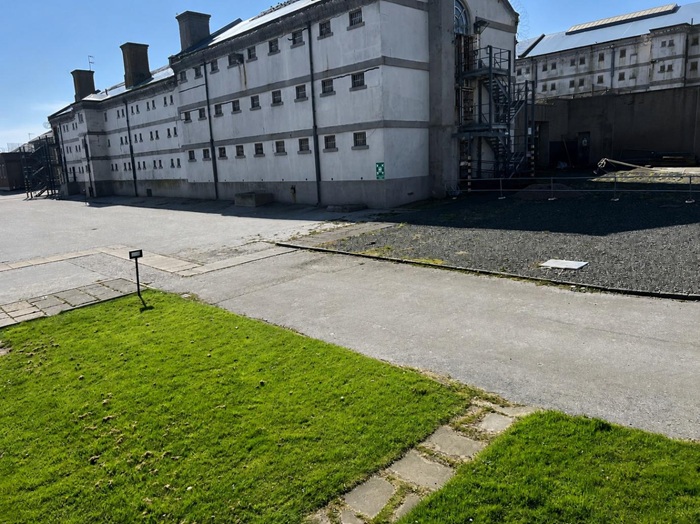
The Building of Peterhead Prison
The government decided not only to start work on the harbour of refuge, but also to build a brand-new prison directly next door. The logic was simple – the prisoners could be used as convict labour to complete the refuge on the cheap. And so, from 1886 onwards, Peterhead’s maritime and prison histories literally grew alongside each other.
The prison itself opened in 1888 as Scotland’s only convict prison. These types of prisons were designed to house serious criminals serving long sentences of penal servitude, otherwise known as hard labour. The original capacity of Peterhead Prison sat at 208. While the convicts did not work on the construction of the harbour itself, they did break granite at the local quarry and support the general harbour works.
Over the years, Peterhead Prison underwent a number of additions and renovations in 1909, 1960, and 1962, and the population slowly increased. In 1949, the Criminal Justice Act ended the formal ‘hard labour’ process, and the nature of prison employment shifted from outdoor quarrying to indoor work sheds. The harbour refuge was eventually completed in 1956.
In the late 20th century, Peterhead became Scotland’s high-security prison, and eventually the national facility for long-term male prisoners convicted of sexual offences. Needless to say, it garnered a strong reputation. But Peterhead Prison finally closed its doors in 2013 after more than 125 years of operation.
The 1987 Peterhead Prison Riot and Hostage Siege

Peterhead Prison has a long and complex history, but it will forever be synonymous with the hostage siege of 1987.
Leading up to the dramatic siege, there had been years of unrest within the walls of Peterhead Prison. Throughout the 1970s and 80s, there had been a series of protests and demonstrations against both the conditions inside the prison and Scotland’s penal policy as a whole. 1987 was also far from the first riot.
However, what escalated this particular riot can be pinpointed precisely to D-Wing on the 28th of September. During a disturbance, the prisoners took control of the wing and, more significantly, an officer by the name of Jackie Stuart was taken hostage. What followed was a long four-day standoff surrounding a prison already known for its fearsome inmates and remote, isolated locale. The likes of Sammy ‘The Bear’ Ralston, Douglas Mathewson, and Malcolm Leggat dragged a chained Jackie Stuart onto the roof, where he was paraded in front of the authorities and television cameras.
The siege finally ended on the morning of the fifth day when the Special Air Service stormed the prison with smoke bombs and retook control. Estimates say that the damage caused during the siege reached £92,000, which was a lot of money back in the 1980s!
Peterhead Is Much More Than a Prison
Although it has a dark and dramatic past, Peterhead is far more than the site of a famous former prison. The town’s identity as a maritime hub alone long predates the building of prison cells, meaning it will always be ‘the port town’ rather than ‘that town with the prison’.
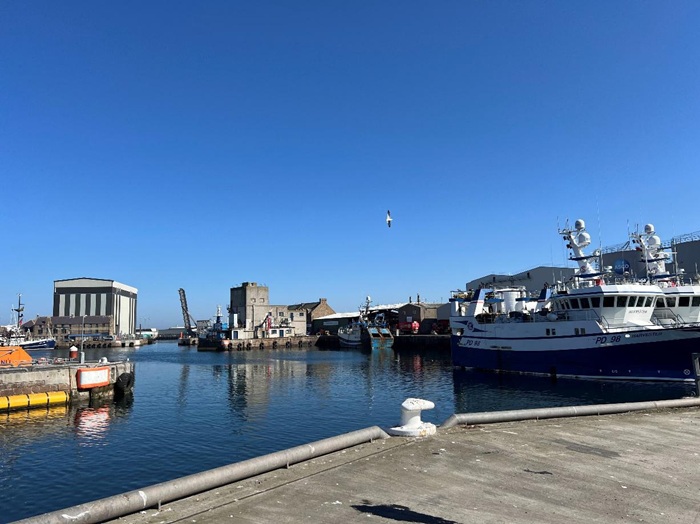
The harbour refuge itself was an incredible feat of 19th-century engineering, while parts of the main harbour were developed or reconstructed by famous British engineers, including John Smeaton, John Rennie and Thomas Telford.
These days, tourists may be drawn to Peterhead for the abandoned prison, but they stay for the rugged nature, beautiful harbour, iconic granite walls, open North Sea, and access to the cliffs, beaches, and sea stacks of the Buchan coastline.
NOTE: Although the original prison closed in 2013, the site became a museum and heritage attraction. It closed temporarily in April 2026 but has now reopened for tourists to visit the site of the famous hostage siege. Just make sure you explore some of Peterhead’s natural beauty too!
Author: Seb Jenkins
Photos: GBC